



Bag Making Machinery
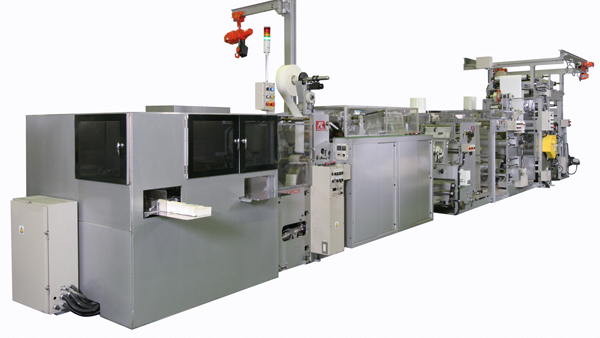
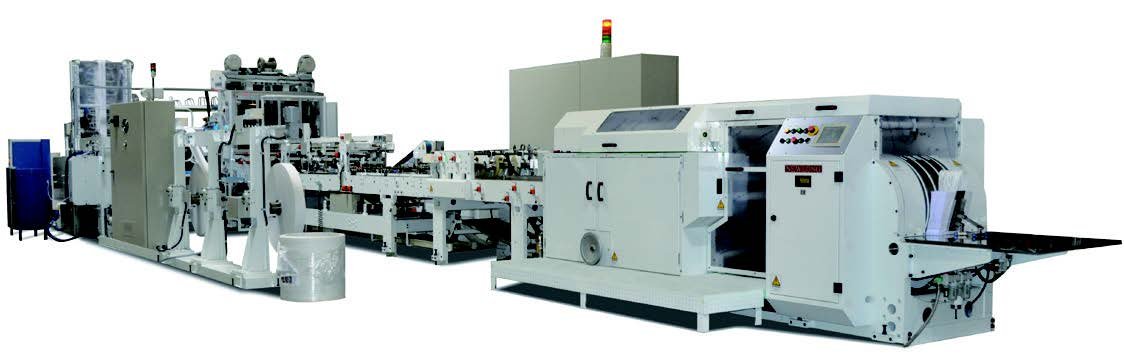
Industrial paper bag making machines, built around your paper
Every paper bag starts on one of two machine platforms: roll-fed or sheet-fed. The right choice depends on your paper format, your run lengths, and the bag styles you produce, not on which one happens to be cheaper on paper. Newlong builds both, and we help converters choose the configuration that matches their actual production, not a generic spec sheet.
Our bag making lines form, glue, cut, and stack paper bags at industrial speed, from small retail formats to heavy-duty industrial sacks. Every line is engineered for the paper grades you actually run, kraft, recycled kraft, and coated stock, with the tension control and glue application that keeps output consistent across a full shift.
Roll-fed or sheet-fed: what actually decides it
- Roll-fed feeds directly from a paper roll, ideal for high-volume, continuous production runs where changeover frequency is low and throughput is the priority.
- Sheet-fed works from pre-cut sheets, giving more flexibility for shorter runs, varied bag sizes, and printed retail bags where format changes happen often.
Neither is universally better. A converter running long batches of the same industrial sack is usually better served by roll-fed. A converter producing a wide range of printed shopping bags for retail customers usually gets more effective capacity from sheet-fed. If you are not sure which fits your product mix, our engineering team will review your run-length and format data before recommending either configuration, the same approach we use when customers are scaling to a second line.
Built for the paper, not just the bag
Paper is not one material. Kraft, recycled kraft, and coated stock each behave differently under tension, glue, and heat, and a machine tuned for one can underperform on another. We configure tension control, glue stations, and forming tooling around the specific grades our customers run, so output stays consistent instead of drifting between shifts. This is the same principle we cover for operators in our operator training guide: understanding the material is what separates a good shift from a scrap-heavy one.
Where our bag making lines are used
- Food and retail: printed shopping bags, bakery and grocery bags, bags requiring precise, repeatable print registration
- Industrial and construction: multiwall sacks for cement, chemicals, and building materials, built for high-speed valve or open-mouth closing downstream
- Agriculture and feed: bags sized and reinforced for bulk product handling and outdoor pallet storage
Once a bag comes off the making line, it typically moves to closing. Our bag sewing and bag engineering ranges cover sewn, heat-sealed, and water-tape closures, so the whole line, from roll or sheet to finished bag, can come from a single engineering partner.
Frequently asked questions
What is the difference between roll-fed and sheet-fed bag making?
Roll-fed machines feed paper directly from a continuous roll and suit high-volume runs with infrequent changeovers. Sheet-fed machines work from pre-cut sheets, offering more flexibility for shorter runs and frequent format changes. The right choice depends on your run lengths and product mix rather than one format being universally superior.
What paper grades can Newlong bag making machines run?
Our lines are configured for kraft, recycled kraft, and coated paper stock. Tension control, glue application, and forming tooling are set up around the specific grade you run, since each paper type behaves differently under tension, glue, and heat.
Can one machine produce multiple bag sizes?
Yes, within the range the machine is configured for. Format changeovers take longer on high-volume roll-fed lines optimised for a narrow size range, and are faster on sheet-fed lines built for variety. If your product mix spans a wide range of sizes, we can advise on the configuration that minimises changeover time.
How does bag making connect to closing and sewing?
A finished paper bag needs both a formed body and a closed top or bottom. Our bag making lines produce the formed bag, and our bag sewing and bag engineering equipment handles the closing step, sewn, heat-sealed, or water-tape, depending on your product and compliance requirements.
Do you support customers scaling from one line to two?
Yes. We regularly help converters evaluate whether a second line should duplicate their existing configuration or run a complementary one, based on their actual production data. See our guide on when and how to add a second machine for the full framework.